
The global business landscape is entering a period of profound structural change. Driven by the convergence of advanced computing, ecological imperatives, demographic shifts, and geopolitical realignments, the foundational rules of industry are being rewritten. Over the coming decade, organizations will not merely adopt new digital tools; they will fundamentally overhaul their operating architectures, energy systems, workforce models, and supply chains.
Navigating this transition requires more than incremental adjustments. Leaders must understand the macroeconomic, technological, and biological forces that are transforming raw concepts into industrial realities. The companies and institutions that anticipate these shifts today will build the durable competitive advantages of tomorrow.
The Evolution Toward Agentic Artificial Intelligence and Autonomous Operations
Artificial intelligence has progressed beyond experimental predictive algorithms and basic conversational interfaces. The next decade will be defined by agentic systems: autonomous software agents capable of reasoning, decomposing complex goals into sequential tasks, making operational decisions, and executing workflows across enterprise software without continuous human intervention.
Autonomous Workflow Orchestration
Rather than humans manually clicking through enterprise resource planning platforms or writing routine code, agentic AI will manage dynamic operations in real time. These systems will autonomously balance supply chain logistics during disruptions, conduct automated cybersecurity incident triage, optimize real-time digital advertising bids, and manage corporate finance compliance.
Key dimensions of this shift include:
-
Intent-Driven Software Engineering: Developers will articulate high-level objectives and business constraints, while AI systems generate, test, deploy, and maintain self-healing code bases.
-
Hyper-Automated Customer Lifecycles: Customer interactions will transition from scripted chatbots to context-aware agents capable of executing complex resolutions, account adjustments, and customized product provisioning.
-
Continuous Operational Learning: Enterprise platforms will actively analyze workflow bottlenecks, dynamically restructuring business processes to eliminate latency and operational friction.
Governance, Alignment, and Tech Sovereignty
As autonomous systems assume greater responsibility, corporate governance will center heavily on algorithmic transparency, data lineage, and safety guardrails. Companies and nation-states alike are prioritizing digital sovereignty, ensuring that critical data infrastructure, foundational models, and specialized silicon remain secure from external geopolitical pressure.
The Clean Energy Transition and Grid Modernization
The global commitment to decarbonization is accelerating the most capital-intensive industrial transition in modern history. Meeting global energy demands while achieving net-zero targets requires a complete modernization of power generation, energy storage, and industrial manufacturing methods.
Advanced Energy Storage and Grid Architecture
Renewable power sources such as solar and wind generate variable electrical output. Balancing modern power grids requires scalable, long-duration energy storage systems that extend beyond standard lithium-ion technology.
Critical technological avenues include:
-
Solid-State and Sodium-Ion Batteries: Next-generation battery chemistries that offer higher energy densities, lower fire risk, and reduced reliance on scarce mineral supply chains.
-
Thermal and Mechanical Storage: Utilizing molten salt, compressed air, and advanced flow batteries to store industrial-scale energy for days or weeks.
-
Decentralized Microgrids: Localized energy generation and storage networks powered by AI that balance regional loads and protect critical infrastructure from centralized grid failures.
Industrial Decarbonization
Hard-to-abate sectors such as steel manufacturing, chemical synthesis, cement production, and commercial aviation are replacing fossil fuels with green hydrogen, direct electrification, and carbon capture technologies. Companies that engineer scalable, low-carbon industrial inputs will capture dominant market positions as carbon tariffs and regulatory mandates expand worldwide.
Precision Biotechnology and Cellular Manufacturing
Biotechnology is shifting from empirical laboratory discovery toward computational bio-engineering. By merging machine learning with genomics, synthetic biology, and molecular modeling, researchers are treating biological systems as programmable platforms.
Personalized Medicine and Preventative Therapies
Healthcare is moving from reactive treatment protocols to predictive, personalized intervention. Advances in genetic sequencing, messenger RNA platforms, and cellular therapies allow medical providers to design treatments matched to an individual specific biological profile.
-
Targeted mRNA Therapeutics: Rapidly configurable therapies engineered to target specific cancer cell mutations and autoimmune conditions.
-
CRISPR and Gene Editing: Precision genetic tools that correct congenital mutations and offer curative pathways for previously untreatable genetic diseases.
-
Continuous Biomarker Monitoring: Non-invasive, wearable biosensors that track metabolic indicators, alerting patients and clinicians to cardiovascular or glycemic abnormalities before clinical symptoms appear.
Bio-Fabrication and Circular Materials
Beyond healthcare, synthetic biology is transforming material manufacturing. Engineered microorganisms in fermentation bioreactors now produce structural proteins, eco-friendly textiles, lab-grown bio-plastics, and sustainable agricultural inputs. This shift reduces dependence on petrochemicals and mitigates agricultural land degradation.
Spatial Computing and the Industrial Metaverse
Immersive technologies are moving past consumer entertainment to become essential tools for industrial engineering, architecture, and advanced technical training. Spatial computing blends high-resolution visual rendering with physical environments through augmented reality headsets and sensor-laden workspaces.
Digital Twins in Manufacturing and Civil Infrastructure
A digital twin is a real-time virtual simulation of a physical asset, manufacturing facility, or urban infrastructure network. Connected through thousands of industrial Internet of Things sensors, digital twins allow operators to:
-
Simulate operational changes and stress-test factory layouts before physical construction begins
-
Predict mechanical component wear and schedule preventative maintenance before machinery fails
-
Optimize energy efficiency and traffic flow across entire metropolitan centers in real time
Remote Collaborative Engineering
Global engineering and medical teams can collaborate within shared three-dimensional spatial environments. Surgeons can plan complex procedures on volumetric anatomical reconstructions, while aerospace engineers can examine structural prototypes with colleagues across different continents, cutting product development timelines and travel overhead.
Quantum Computing and Post-Quantum Security
Quantum computing is transitioning from academic physics experiments toward commercial application. By utilizing quantum bits that exist in states of superposition and entanglement, quantum processors can solve mathematical, optimization, and molecular simulation problems that are completely intractable for classical supercomputers.
Near-Term Industrial Applications of Quantum Systems
While universal fault-tolerant quantum computers are still evolving, noisy intermediate-scale quantum systems are already impacting several specialized industries:
-
Molecular Simulation for Material Science: Simulating complex atomic interactions to discover novel room-temperature superconductors, efficient battery catalysts, and agricultural fertilizers.
-
Financial and Logistics Optimization: Solving multi-variable routing, portfolio risk management, and global supply chain distribution models in seconds rather than days.
-
Pharmaceutical Discovery: Accelerating drug candidate screening by modeling protein-ligand binding mechanics at the quantum molecular level.
The Urgent Shift to Post-Quantum Cryptography
The emergence of quantum processing represents an existential threat to modern asymmetric encryption standards, such as RSA and Elliptic Curve Cryptography, which secure global banking, communication networks, and government systems. Over the coming decade, every major enterprise must execute cryptographic migrations to post-quantum cryptographic standards, replacing legacy encryption with quantum-resistant mathematical algorithms before quantum systems achieve cryptographic decryption capabilities.
Demographic Transitions and the Changing Nature of Work
The global workforce is experiencing a dual demographic shift. Developed economies and major manufacturing hubs are confronting aging populations and shrinking labor pools, while emerging markets in Africa and Southeast Asia are experiencing rapid youth population growth.
Human-Robot Collaboration in the Workplace
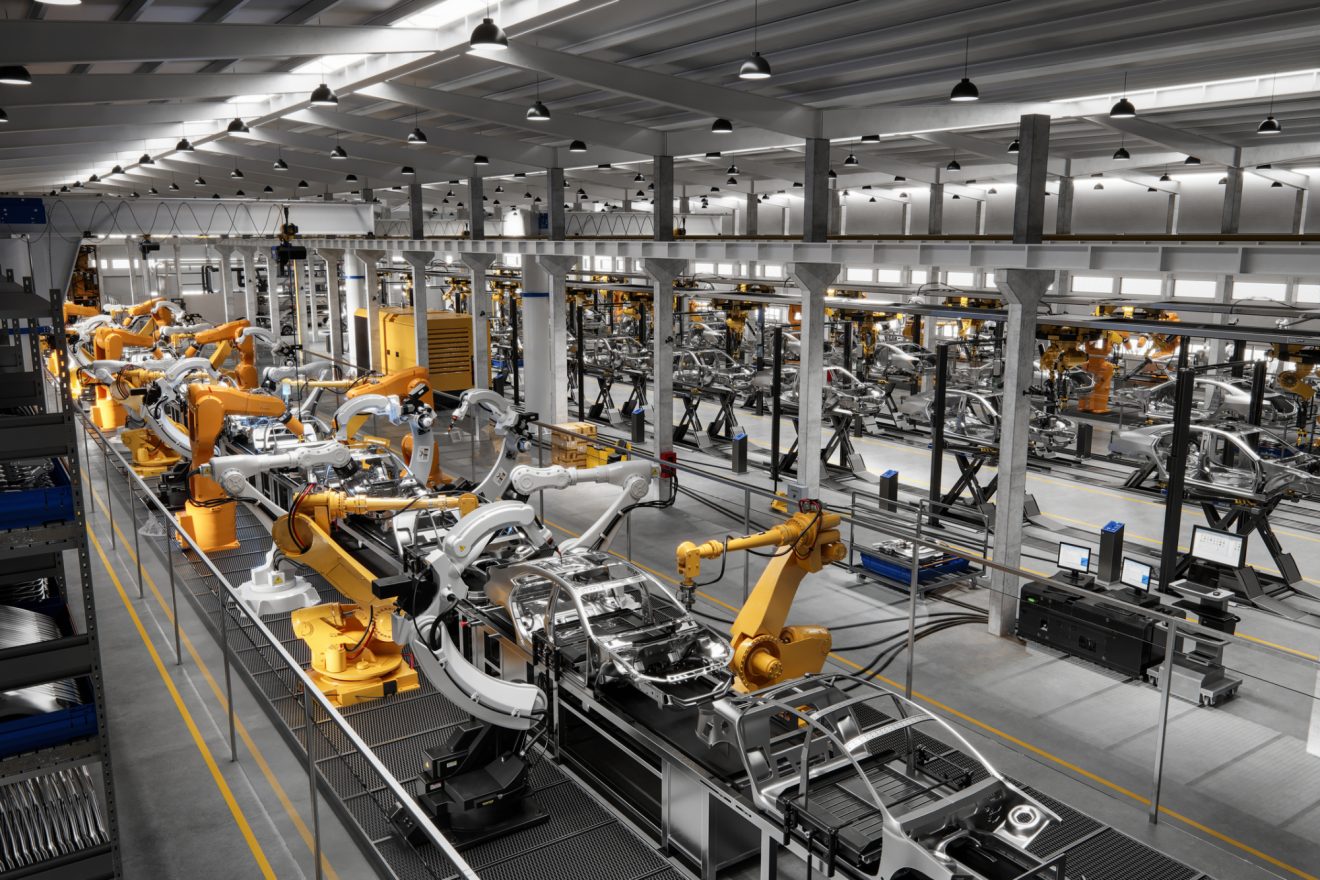
To counteract labor shortages in logistics, agriculture, healthcare, and manufacturing, enterprises are integrating collaborative robots (cobots) alongside human staff. These machines handle physically hazardous, repetitive tasks, enabling human workers to focus on supervisory, creative, and strategic functions.
Asynchronous and Borderless Knowledge Work
The normalization of distributed, remote, and hybrid work models has created a borderless global talent pool. Organizations are redesigning their management systems around asynchronous documentation, objective output metrics, and cross-cultural agility rather than physical office presence.
Strategic Adaptation in an Era of Acceleration
The defining characteristic of the next decade is the interconnected nature of these trends. Advances in artificial intelligence accelerate quantum computing research, which in turn unlocks novel battery chemistries that power clean industrial grids. No industry will remain insulated from these compounding technological and environmental forces.
Organizations that succeed will be those that cultivate structural adaptability, protect their digital infrastructure, continuously upskill their human workforce, and align their commercial strategies with the reality of a decarbonized, highly automated global economy.
Frequently Asked Questions
What is the difference between generative artificial intelligence and agentic artificial intelligence?
Generative artificial intelligence focuses primarily on producing content, such as text, images, or code, in response to direct user prompts. Agentic artificial intelligence goes further by autonomously setting sub-goals, using software tools, browsing external environments, making decisions, and executing multi-step tasks independently to achieve a broader objective defined by a human operator.
Why is post-quantum cryptography a pressing concern today if large-scale quantum computers are still developing?
Adversaries and cybercriminals engage in harvest now, decrypt later tactics, where they intercept and store encrypted enterprise and government data today to decrypt it once sufficiently powerful quantum computers become available. Migrating to post-quantum cryptographic algorithms now ensures that long-lived sensitive data remains protected in the future.
How will demographic aging in major economies impact supply chain automation?
Aging populations in major manufacturing countries reduce the availability of manual labor in warehousing, freight transport, and assembly. This labor shortage accelerates capital investment into autonomous logistics, robotic material handling, automated agricultural harvesters, and predictive supply chain software to maintain industrial output.
What are the main challenges preventing the widespread adoption of synthetic biology materials?
The primary barriers are scaling bioreactor capacity, reducing the cost of growth media substrates, achieving consistent batch-to-batch structural performance, and establishing regulatory approval pathways for novel bio-fabricated compounds intended for consumer contact or consumption.
How does spatial computing differ from traditional virtual reality gaming headsets?
Spatial computing incorporates advanced optical passthrough, spatial audio, eye-tracking sensors, and LiDAR mapping to blend digital objects seamlessly into the user physical environment. It focuses on functional enterprise workflows, such as medical modeling, engineering design, and collaborative work, rather than isolated gaming experiences.
What is a digital twin, and how does it save capital for heavy industries?
A digital twin is a dynamic, virtual replica of a physical machine, facility, or process that receives live telemetry from IoT sensors. It allows companies to run stress tests, model process adjustments, and catch mechanical flaws virtually, preventing expensive physical assembly errors, operational downtime, and catastrophic machine failures.
How are companies addressing the intense electricity demands of advanced computing and artificial intelligence data centers?
Enterprises and utility providers are pairing high-performance data centers directly with dedicated zero-carbon energy sources, including nuclear small modular reactors, geothermal installations, and dedicated on-site solar and battery storage systems, while developing more energy-efficient silicon and liquid cooling architectures.